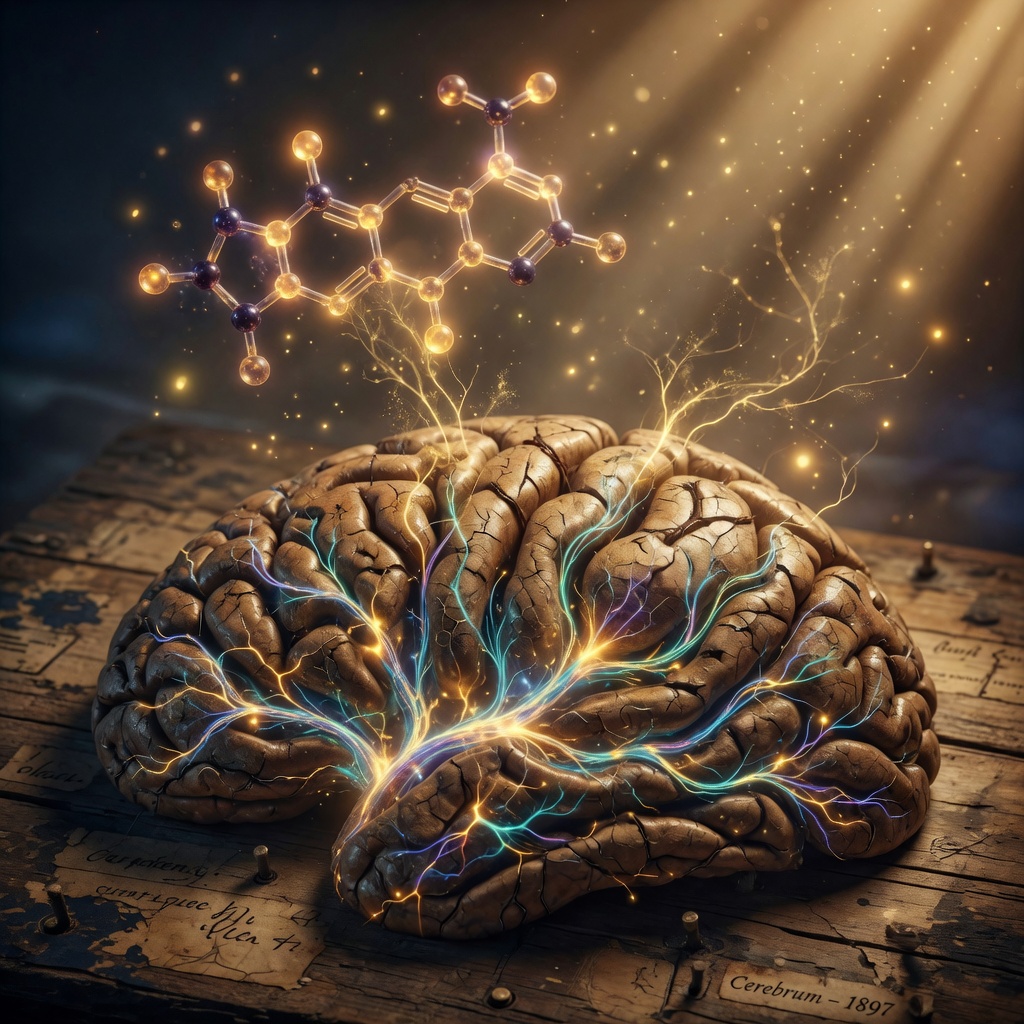
Something strange is happening in the halls of power. Harvard Law School is hosting panels on whether psychedelic therapy should be legalized at the federal level. Oregon already has regulated psilocybin sessions running. Colorado followed. California is fast-tracking research reviews. Massachusetts is debating competing proposals for psychedelic pilot programs. The Johns Hopkins psychedelic research department has a named chair now, and the person sitting in it is publicly discussing psilocybin’s potential for mood disorders on the same stage as federal drug regulators.
This is not a fringe conversation anymore. It is mainstream, institutional, and accelerating. And if you have spent any time exploring the inner world through meditation, contemplative practice, or even just sitting quietly with your own mind, the question that surfaces is not really about policy. It is deeper than that. Why now? Why is a culture that spent decades criminalizing these substances suddenly racing to put them in clinical settings with licensed therapists and intake forms?
The surface answers are obvious enough. The mental health crisis. Treatment-resistant depression. Veteran suicide rates. The failure of SSRIs to do what they promised for millions of people. Those are real and urgent. But there is something underneath the policy arguments that rarely gets named, and it has everything to do with what the Hermetic traditions call the Principle of Vibration.
The Frequency Problem Nobody Talks About
The Kybalion, that compact distillation of Hermetic philosophy, puts it plainly: nothing rests, everything moves, everything vibrates. Every atom, every thought, every emotional state has its own rate of vibration. Higher vibrations tend toward lighter, more expansive states of being. Lower ones tend toward density, contraction, rigidity.
Now think about what modern life does to the human nervous system. The average person scrolls through hundreds of emotionally charged fragments before breakfast. The news cycle runs on cortisol. Work culture rewards chronic tension and calls it productivity. Social media algorithms are literally designed to keep your attention by keeping you in a state of low-grade agitation. Over years and decades, the mind settles into grooves. Neural pathways harden. The same anxious thoughts loop. The same depressive narratives play on repeat. The vibration, to use the old language, gets stuck.
This is not a metaphor. Neuroscientists studying psilocybin at Imperial College London and elsewhere have documented what they call the “entropic brain” effect. Under psilocybin, the brain’s default mode network – the system responsible for your sense of a fixed, separate self and the habitual stories it tells – quiets down. New neural connections form between regions that normally do not communicate. The brain becomes more flexible, more fluid, less locked into its ruts.
The Hermeticists would not have used the word “neuroplasticity.” They would have said the compound changes the rate of vibration. It loosens the rigid patterns. It allows the mind to move again. And a mind that can move is a mind that can heal.
As Within, So Without
Here is where the Principle of Correspondence gets interesting. “As above, so below. As within, so without.” The patterns at one scale mirror the patterns at another.
Look at what is happening culturally. Millions of people are stuck in rigid mental patterns – looping anxiety, treatment-resistant depression, unprocessed trauma frozen in the body. And simultaneously, the collective culture is stuck in its own rigid patterns – partisan polarization, institutional sclerosis, a healthcare system that manages symptoms rather than addressing root causes, a dominant worldview that treats consciousness as a meaningless byproduct of brain chemistry.
The push to legalize psychedelic therapy is not happening in a vacuum. It is the outer expression of an inner shift. The collective mind is beginning to recognize that the old model is not working. That something needs to loosen. That the rigid grooves – individual and collective – need to be interrupted.
When someone has a psilocybin experience in a clinical setting and reports that their depression lifted, that they felt a sense of unity with something larger, that the walls between them and the world became permeable – that is not just a personal medical event. It is a crack in the consensus trance. It is one more node in the collective field remembering that consciousness is not trapped inside a skull. It is vast, and it can move.
The correspondence principle says that as enough individual nodes shift, the field shifts. Not metaphorically. Actually.
The Sacred and the Clinical
There is a tension in this moment that deserves honest attention. On one side, there is something genuinely hopeful about a culture beginning to acknowledge that the inner world matters, that altered states of consciousness have therapeutic value, that the mind is not a machine to be medicated into compliance but a living system that sometimes needs to be shaken loose from its own patterns.
On the other side, there is a real risk of commodification. When a Harvard panel debates whether psilocybin should be a Schedule I substance or an FDA-approved treatment, the framing is still medical, still commercial, still rooted in the assumption that consciousness is a problem to be managed rather than a territory to be explored.
The Mazatec curanderas who worked with psilocybin mushrooms for centuries did not have intake forms. The Amazonian traditions surrounding ayahuasca did not operate on insurance billing codes. These were sacred practices embedded in communities that understood something the clinical model struggles to hold: the experience itself is the medicine. The substance is not the point. The consciousness it opens is the point.
There is nothing wrong with clinical research. The data coming out of Johns Hopkins, Imperial College, and NYU is genuinely important. It is helping people who are suffering. But there is a difference between using clinical evidence to demonstrate safety and reducing a sacred technology to a patented protocol.
The Hermetic traditions would remind you that the Principle of Gender – the creative interplay of receptive and projective forces – applies here too. The receptive quality is the willingness to be opened, to surrender, to let the experience move through you. The projective quality is the structure, the container, the integration. Ancient traditions held both. They had the ceremony and the preparation. The journey and the return.
The question for this cultural moment is whether we can hold both as well. Whether we can build legal and clinical structures that serve the experience without strangling it. Whether we can honor the mind’s sacred territory while also making it accessible to the veteran who cannot sleep, the mother who cannot stop the spiral of dread, the person who has tried everything and still feels locked inside themselves.
What the Threshold Actually Asks of You
Here is the part that does not make it into policy debates or Harvard panels. You do not need to wait for legislation to begin this work.
The same loosening of rigid patterns that psilocybin facilitates can be approached through daily practice. Meditation, when done consistently, quiets the default mode network in ways that researchers are now documenting with fMRI scans. Breathwork practices shift the body’s chemistry and open states of awareness that parallel psychedelic experiences. Neville Goddard’s practice of assuming the wish fulfilled – living in the feeling state of the reality you want before it appears – is a technology for retuning your vibration without any substance at all.
Joe Dispenza’s work on heart-brain coherence points to the same territory. When you sustain a new emotional state long enough, the body begins to follow. The old patterns lose their grip. New possibilities open. This is not positive thinking. It is a disciplined practice of changing who you are being at the level of your nervous system, your electromagnetic field, your felt sense of reality.
The psychedelic therapy movement is a mirror. It reflects back to the culture something it has forgotten: that consciousness is not fixed, that the mind can be retuned, that healing happens when rigid patterns dissolve and something more fluid takes their place. But the mirror is not the thing itself. The thing itself is your own willingness to explore the inner world, with or without a substance, with or without a therapist, with or without permission from any institution.
The ancient traditions knew this. The mystics at the heart of every major religion knew this. The Kingdom of Heaven is within you. The still point is always available. The Source you are looking for is the one doing the looking.
Sitting With the Question
This cultural moment is not really about psilocybin. It is about what happens when a civilization begins to suspect that the materialist story it has been telling itself is incomplete. That consciousness might be fundamental rather than incidental. That the inner world is not a private delusion but the very fabric from which the outer world is woven.
The push to legalize psychedelic therapy is one expression of that suspicion. It is the collective mind, through its own institutional channels, reaching toward something it cannot quite name. The policy debates will continue. The regulations will shift. Some states will move faster than others. The FDA will do what the FDA does.
But underneath all of that, the real question is personal. It always has been. What is your relationship with your own consciousness? How rigid are the grooves you live inside? What would it feel like to let the vibration shift, even slightly, even for a moment?
You do not need to answer that right now. Just let it sit. Let it be the kind of question that works on you rather than the kind you work on. That is how the best questions operate. They loosen something. And loosening, as it turns out, is exactly what this moment is about.
What patterns in your own mind have become so familiar you mistake them for reality? And what might happen if you let even one of them vibrate at a different frequency today?


